
Organisation: Ligue Corse de Football (Corsican Football League)
Location: Corsica, France
Presented by: David Saladini, League Director & Johan Luiggi, Vice-President
Tech stack: Veo AI cameras + LIGR broadcast graphics platform
Streaming: YouTube
The Vision: More Than Just Match Footage
Ligue Corse de Football has been at the heart of Corsican football since 1922. With 104 registered clubs and 12,000 players, the league manages a sprawling competition structure across the island — from senior divisions right down to youth football.
When the league s leadership sat down to map out their future, they identified three priorities that would shape everything: give clubs proper video tools for technical analysis, create a broadcasting capability for matches, and unlock monetisation opportunities for both the league and individual clubs.
The question was straightforward: how do you deliver broadcast-quality production across 104 clubs without broadcast-sized budgets?
Take 1: The Outsourced Model That Failed
In 2020, the league partnered with Fuchs Sports to handle broadcasting. The arrangement looked reasonable on paper. Fuchs installed fixed cameras in stadiums across Corsica, with their business model built on advertising revenue from the streams. Clubs got free access to the cameras for training and technical analysis — a useful perk that helped get buy-in across the league.
The problem was structural. Fuchs Sports was entirely dependent on ad revenue to fund operations: the cameras, the installation, the maintenance, the platform. When that revenue didn't scale fast enough to cover costs, the whole model collapsed. Fuchs Sports went bankrupt in 2023.
Outsourcing your entire broadcasting infrastructure to a partner whose business model hasn't been proven means your content strategy dies when they do. The league lost its broadcast capability overnight.
A New Path Forward: Owning the Infrastructure
The bankruptcy forced a fundamental rethink. David Saladini and Johan Luiggi didn't just need a new broadcasting partner — they needed a new model entirely. The 2023 reset centred on one principle: keep broadcasting rights and infrastructure in-house.
This time, the league asked a different question: how do we equip clubs with cameras at an affordable price point while retaining full control of the commercial opportunity?
The objectives crystallised into three pillars. First, support the technical work clubs were already doing — video analysis of training sessions and matches. Second, provide disciplinary and security tools that would benefit match officials and league governance. Third, and most ambitiously, build a genuine broadcasting and commercial capability that would generate revenue for the league and its clubs.
Why Veo: Automated Cameras That Actually Scale
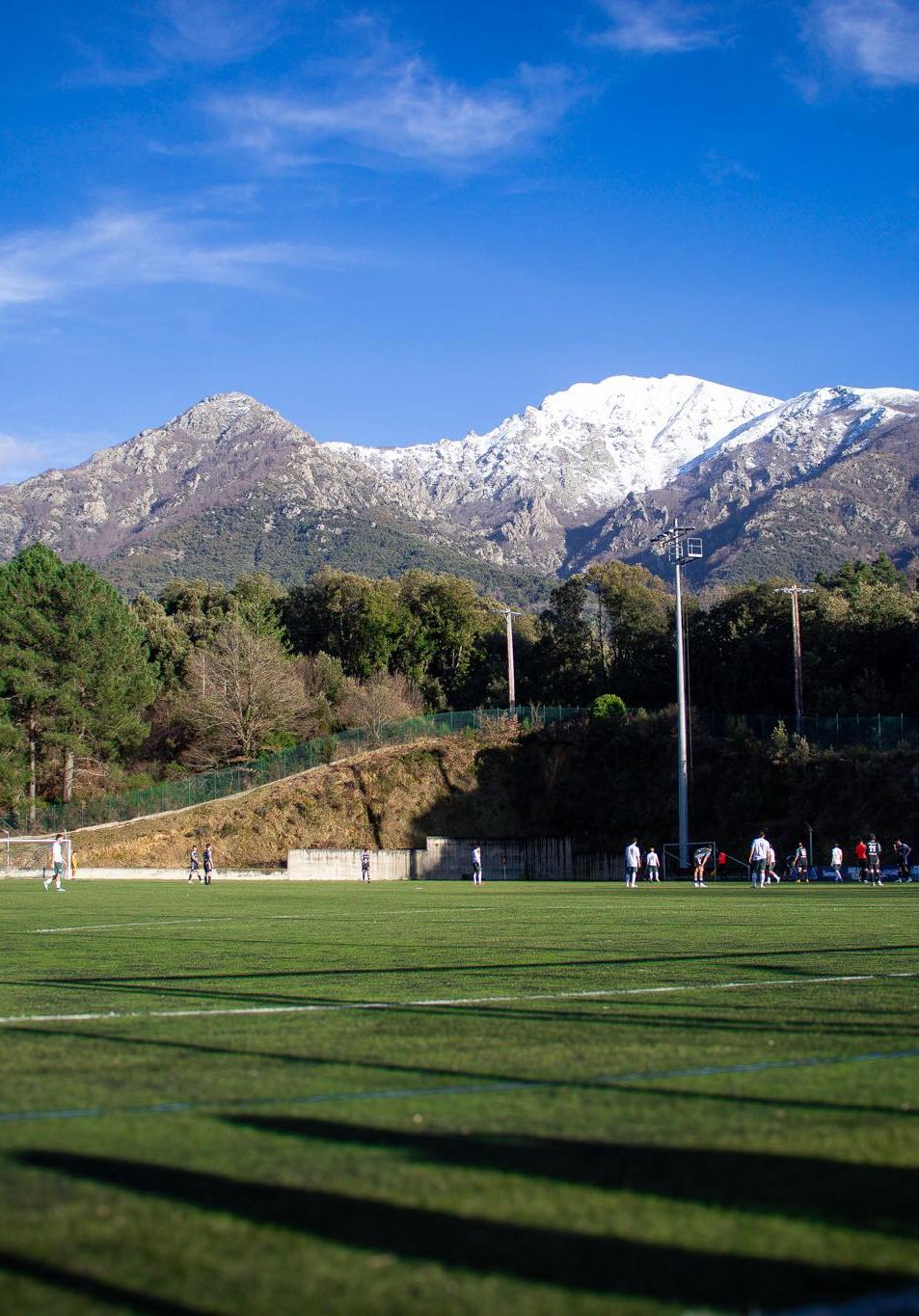
The league chose Veo cameras as the capture hardware. Veo s AI-powered cameras track the action automatically — no camera operator needed. A single unit on a tripod captures the full pitch, with intelligent tracking that follows play and produces a watchable broadcast-quality angle.
For a league with 104 clubs spread across an island, this was the critical unlock. Traditional cameras need a trained operator at every match. Veo cameras need someone to press record. That's the difference between broadcasting a handful of showcase matches and covering your entire competition.
The rollout happened in phases. The 2023-24 season served as a test phase, getting clubs comfortable with the hardware. By 2024-25, Veo cameras became obligatory across the league s top divisions. And the 2025-26 season introduced the full broadcast capability — live streaming with professional graphics.
Take 2: The Intermediate Step
Before LIGR entered the picture, the league explored another broadcasting arrangement. Ahead of the 2024-25 season, French start-up Champ s signed a broadcast deal with the league. Their model was built on retaining a share of ad space while selling the rest to clubs and the league.
The deal delivered some early wins. The league secured its first naming rights deal — the top division became R1 ESCCOM. Champ s provided a streaming platform with basic scoreboard overlays and match statistics. And it worked, to a point. Matches averaged 375 viewers.
But 375 viewers wasn't enough. The league wanted to build a genuine media product, not just put matches online. They needed better production quality, more commercial flexibility, and a platform that clubs could actually manage themselves.
Building Visibility Beyond Live Matches
While the broadcast stack evolved, the league s leadership recognised a deeper truth: amateur football doesn't have a demand problem — it has an audience problem. People care about local football. They just can't find it.
Ligue Corse de Football attacked this from multiple angles. They built partnerships with local media outlets, creating specific content products for each: weekend goal compilations, a goal of the week segment, and a dedicated broadcast of the game of the week. A Corsica TV picked up a regular football show, "TUTTI FOOT," showcasing league content. Via Stella, the Corsican television network, began covering league events.
On the fan engagement side, the league partnered with Pote&Match to introduce gamification — prediction games and goal of the week elections that gave fans a reason to follow matches beyond the 90 minutes. These tools started unlocking commercial opportunities by proving audience engagement to potential sponsors.
Take 3: Why the League Needed LIGR
By late 2025, live matches were starting to catch on. The audience was growing. But the league s requirements had outgrown what Champ s could deliver. They needed four things from their next streaming stack: scoring and match stats manageable from a smartphone, easy onboarding for clubs, built-in advertising and commercial opportunities, and a fan-accessible viewing experience.
The league chose YouTube as their streaming platform — prioritising fan accessibility and discoverability over a walled-garden app. Then they needed a production engine that could transform raw Veo footage into a professional broadcast product.
That's where LIGR came in.
LIGR: Plug and Play Broadcast Production
LIGR is a cloud-native broadcast graphics overlay platform purpose-built for live sports. It takes the video stream from cameras like Veo and layers on professional-quality graphics automatically. No graphics operator. No production truck. No manual scoreboard updates.
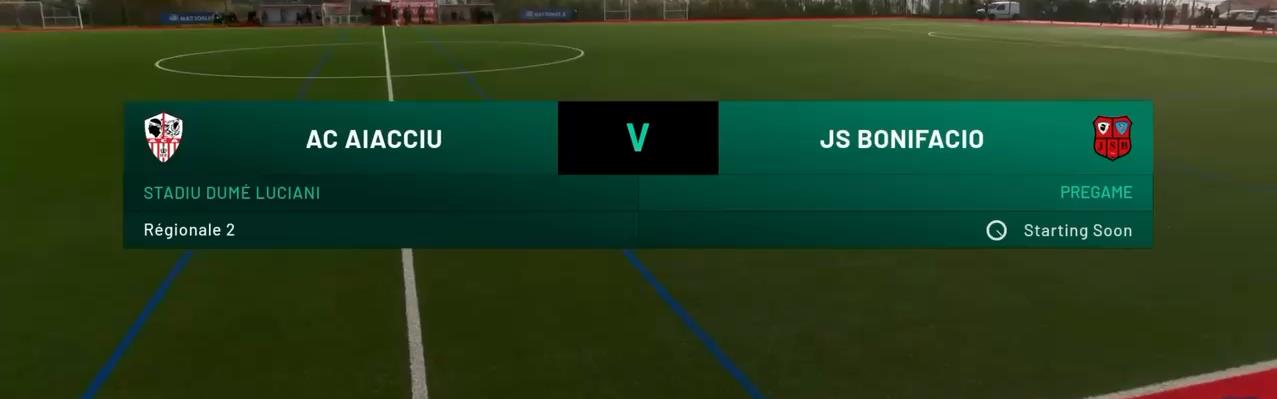
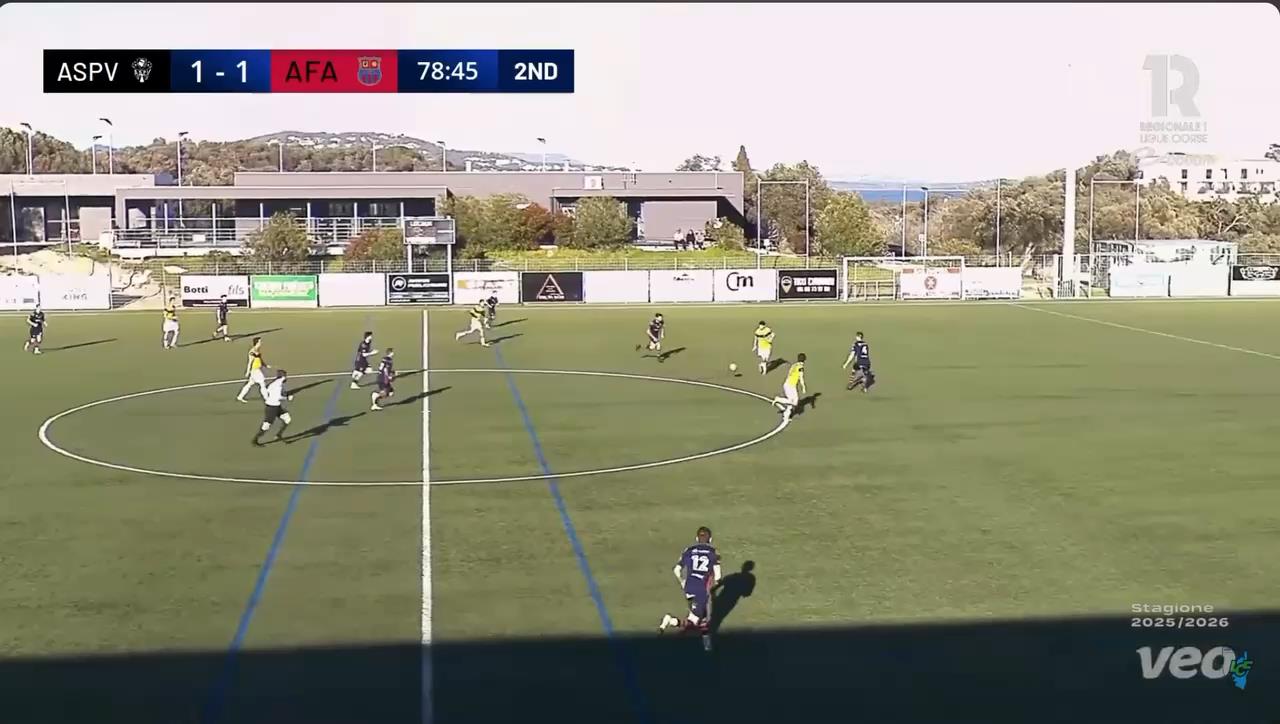
For Ligue Corse de Football, the integration was straightforward. Veo Live was already part of the clubs workflow — cameras streaming live footage via RTMP. LIGR plugged directly into that stream, adding scoreboards, team logos, sponsor overlays, lower thirds, and match clocks in real time.
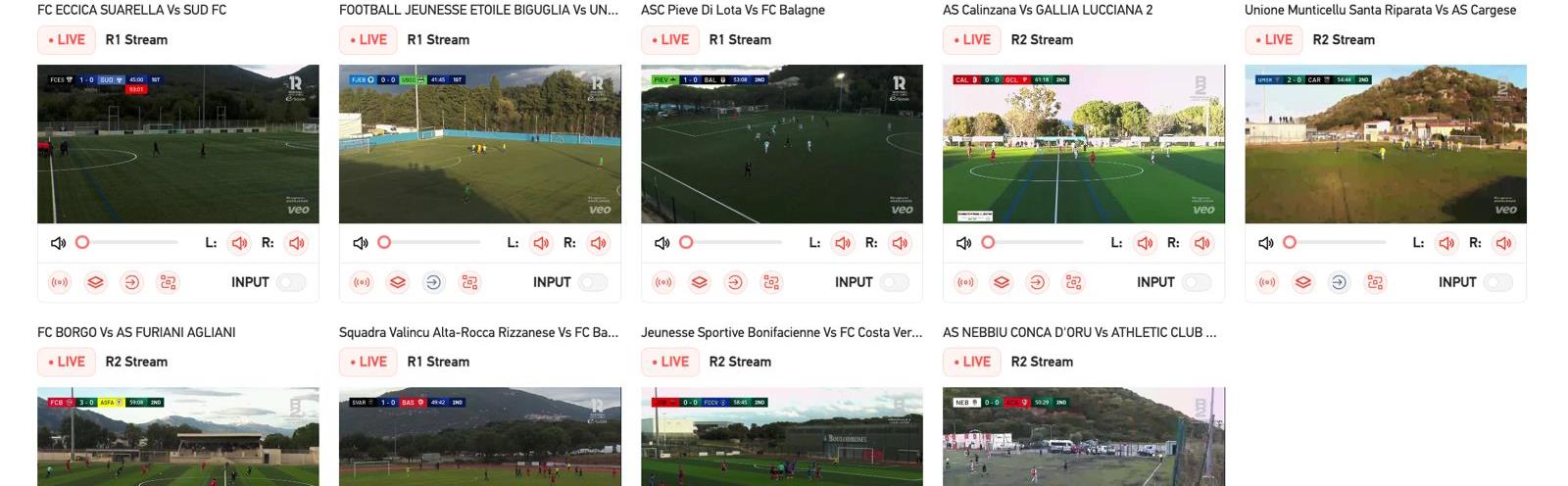
The league now manages 10 simultaneous live streams every weekend through LIGR's Control Room — covering both the R1 and R2 divisions. Each club gets a dedicated portal within LIGR for managing their team information, player data, and club branding. Automatic highlight generation means clubs get shareable content without any post-production work.
The entire workflow runs through LIGR's Game Plans — pre-configured automation sequences that handle everything from the pre-match build-up through to the final whistle. Twelve matches broadcast every weekend, all produced to a consistent professional standard, all without a single dedicated operator.
The Results: 5× Viewership Growth
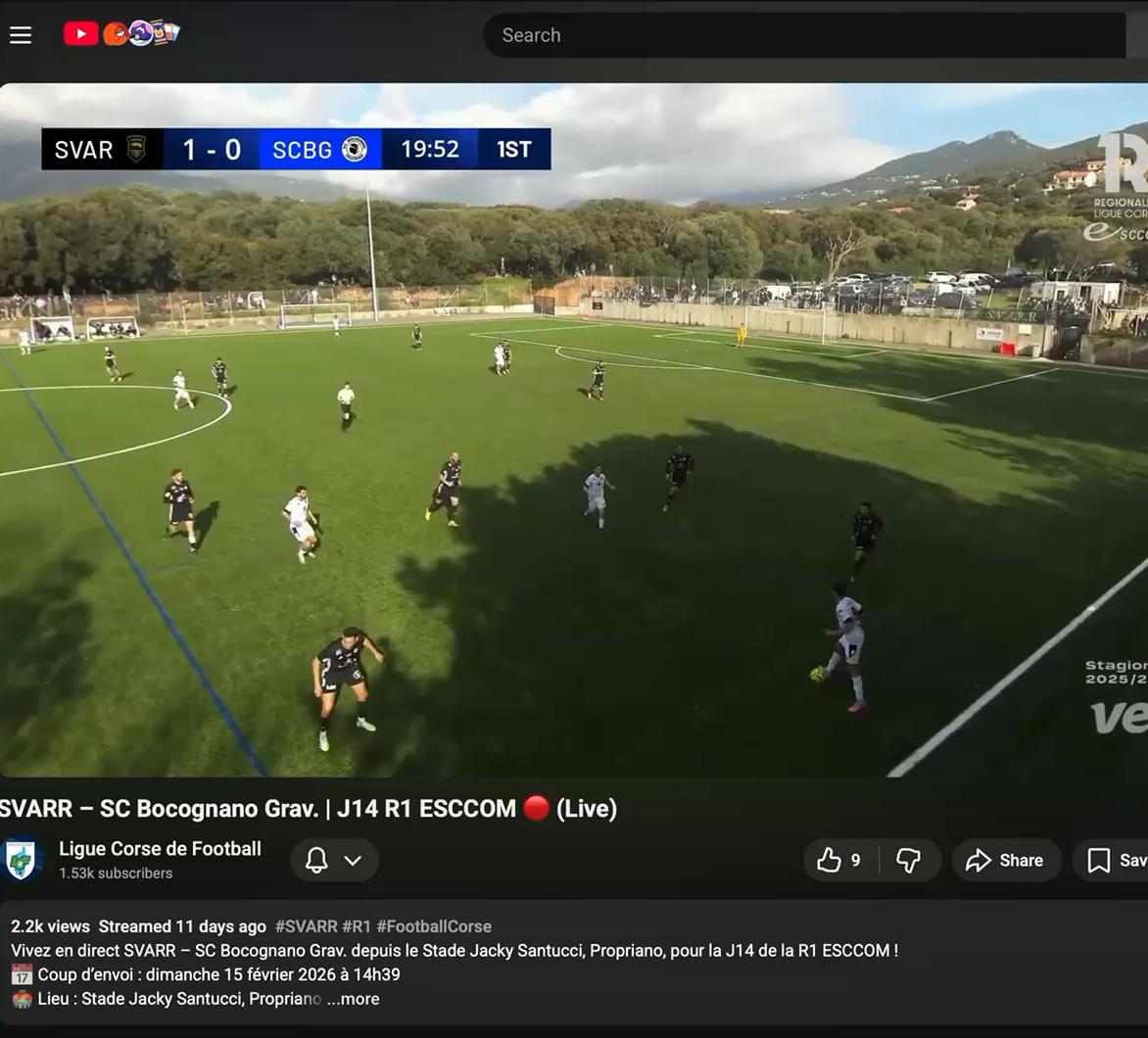
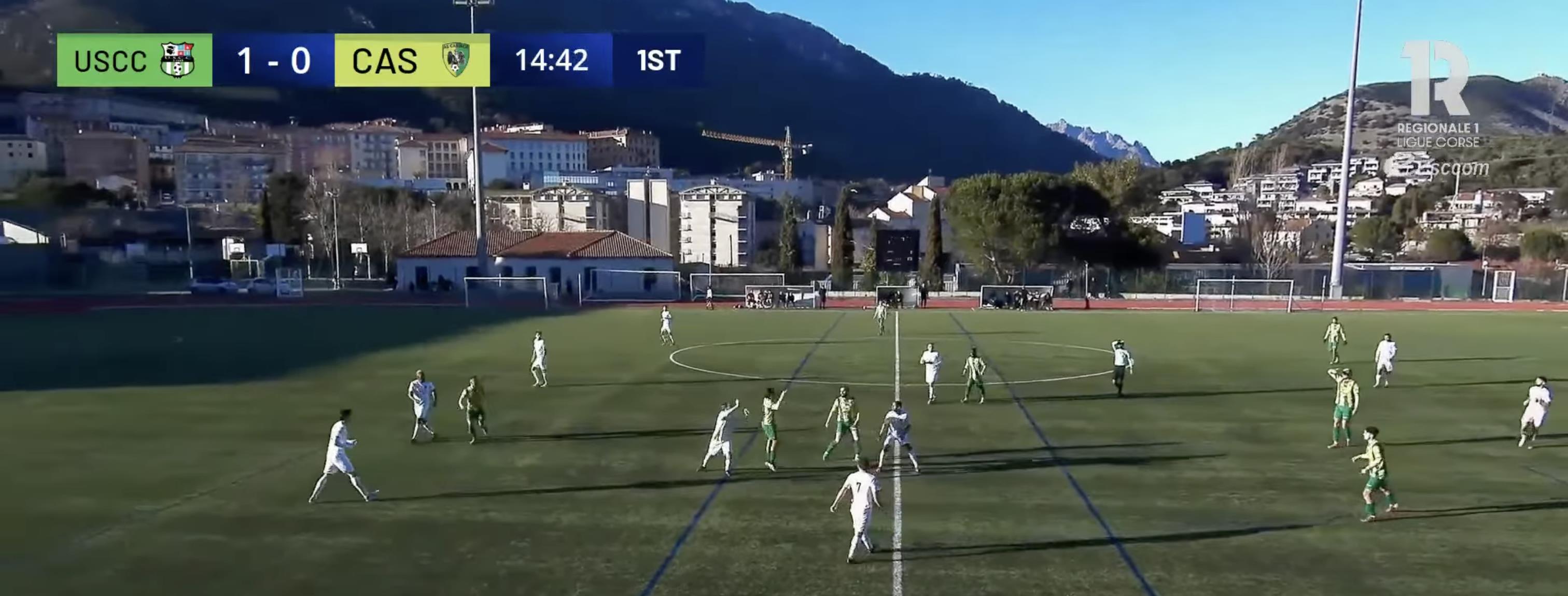
The impact was immediate. The league s very first LIGR-produced match attracted 6,000 views — a number that would have been unthinkable six months earlier.
As the season progressed, the numbers told a clear story. R1 ESCCOM matches now average 1,500 viewers per game — a 5× increase from the 375 average with the previous streaming setup. Monthly subscriber growth sits at 14%, with no sign of plateauing.
The audience profile is exactly what sponsors want to see: 50% of viewers fall in the 18-34 age bracket, and 38% of matches are watched on TVs — indicating genuine appointment viewing rather than casual phone scrolling.
50% of viewers are aged 18-34 and 38% watch on TVs. This isn't casual scrolling — it's appointment viewing. That audience profile makes sponsorship conversations significantly easier for the league and its clubs.
The Commercial Model: 67 Ad Spaces per Match
Viewership is only half the story. LIGR's graphics automation unlocked something the league had been chasing since day one: a genuine commercial revenue stream.
Each broadcast now features 67 ad spaces per match — without interrupting live coverage. Sponsor logos, banners, and branded graphics rotate automatically through LIGR's Game Plans alongside the match action. Ad inventory is split between three stakeholders: the home team, the away team, and the Corsican league itself. Every match generates commercial value for everyone involved.
The league plans to fully deploy this commercial model across all participating clubs for the 2026-27 season, turning what was once a cost centre into a revenue line for the entire competition structure.
The Journey: A Timeline
What Changed: Before and After
| Dimension | Before (Champ s) | After (Veo + LIGR) |
|---|---|---|
| Average viewers per match | 375 | 1,500 (5× growth) |
| Ad spaces per match | Limited (partner-controlled) | 67 (league + clubs controlled) |
| Simultaneous live streams | Managed externally | 10 via LIGR Control Room |
| Club self-service | No | Dedicated club portals |
| Broadcasting rights | Shared with partner | Retained by the league |
| Graphics operators | Manual or basic overlay | Zero — automated via LIGR |
| Streaming platform | Proprietary app | YouTube (open, discoverable) |
| Highlights | Manual post-production | Automatic generation |
| Audience age 18-34 | Not tracked | 50% of viewership |
Three Objectives, One Solution
The league s original three pillars mapped cleanly onto the Veo + LIGR stack:
1. Technical work for clubs
Every club now has access to match and training footage through Veo s platform. Coaches can review sessions, analyse opponent tactics, and track player development — capabilities that were previously only available to clubs with dedicated video analysts. The camera records everything automatically, so there's no additional workload on club volunteers.
2. Disciplinary and security tools
Full match footage provides clear evidence for disciplinary reviews. Incidents that previously relied on referee reports and witness statements can now be reviewed on video. The league s governance and match official support improved significantly with reliable footage from every match.
3. Broadcasting and commercial
This is where LIGR transformed the picture. Raw match footage has limited commercial value. But a properly branded broadcast — with scoreboards, team graphics, sponsor overlays, and professional presentation — is a media product. With 1,500 average viewers, 67 ad spaces per match, and 14% monthly subscriber growth, the league has built a genuine commercial property from what was once just raw footage on a streaming app.
Without Veo, none of this would have been possible. We went from losing our entire broadcast capability overnight to running 12 professional-quality live matches every weekend with LIGR — and every single one generates commercial value for our clubs and our league.
— Ligue Corse de Football leadershipWhat's Next for Ligue Corse de Football
The league isn't standing still. The 2026-27 season roadmap includes deploying the commercial model across all participating clubs — giving every team access to the 67-ad-space revenue model. U16 and U18 matches will be filmed for the first time, extending the broadcast footprint to youth football.
Media partnerships continue to deepen, with Via Stella and A Corsica TV using league content across their programming. The league is scaling its social media presence by using live match moments — clips, highlights, and goal compilations — to drive audience growth between match days.
From a league that lost its broadcast capability when an external partner went bankrupt, to one that produces 12 live matches every weekend, averages 1,500 viewers per match, and generates 67 ad-revenue opportunities per broadcast — Ligue Corse de Football has built the model that every regional league should be studying.
Why This Model Works for Regional Leagues
Ligue Corse de Football isn't unique in its challenges. Regional and national football leagues everywhere face the same equation: audiences expect broadcast-quality coverage, but traditional production costs make it impossible to cover more than a handful of high-profile matches.
The Veo + LIGR model changes the economics fundamentally. Fixed costs replace variable costs. Automated production replaces manual production. One-time camera deployment replaces per-match operator hire. And cloud-based graphics mean the league gets consistent, professional branding across every single broadcast without maintaining any on-site production equipment beyond the camera itself.
Football Australia has proven this at an even larger scale — automating broadcast graphics for over 4,000 matches with LIGR, including 650+ National League matches per season streamed on DAZN. The technology scales from a 104-club island league to an entire national competition.
Key Takeaways for Other Leagues
Own your infrastructure. The Fuchs Sports bankruptcy taught Ligue Corse de Football a hard lesson. If your broadcasting capability depends entirely on an external partner, you're one business failure away from losing everything. In-house ownership of cameras and cloud-based graphics gives you independence.
Audience growth follows production quality. Going from 375 to 1,500 average viewers — a 5× increase — happened because the product improved. Professional graphics, consistent branding, and YouTube discoverability turned casual clips into appointment viewing.
Think commercial from day one. LIGR's 67 ad spaces per match give every stakeholder — home team, away team, and league — a commercial upside. The revenue model was built into the production stack, not bolted on afterwards.
Start with the camera, add graphics, then monetise. Veo solves the capture problem. LIGR solves the production problem. Together, they turn raw footage into a media product. Ligue Corse de Football did it in stages — testing, obligatory rollout, then broadcast production — and the commercial layer followed naturally.
Build beyond match day. Goal compilations, prediction games, media partnerships, and social content all feed audience growth between matches. The broadcast is the engine, but the content ecosystem drives long-term value.
Frequently Asked Questions
Ready to Automate Your League s Broadcasts?
See how LIGR can turn your camera feeds into professional broadcast products — with zero operators and built-in monetisation.